It is the first question almost everyone asks, and the honest answer is: it depends. A bespoke staircase is made to measure for your home, so the price follows the design, the timber, the size of the flight and how it is finished. That said, “it depends” is a frustrating answer when you are trying to budget — so here is a realistic picture of what moves the number, and roughly where the figures land in 2026.
A rough guide to the numbers
Every project is quoted individually after a survey, but as a general guide for the UK market:
- Stair cladding (retreading) an existing staircase — from around £2,000–£4,000. Our own solid oak retread starts at £2,395 for a standard 14-step flight; a full transformation with a new balustrade is survey-led and usually runs to around £5,000–£9,000.
- A new bespoke straight staircase in solid oak — typically £4,000–£8,000 supplied and fitted, depending on timber and balustrade.
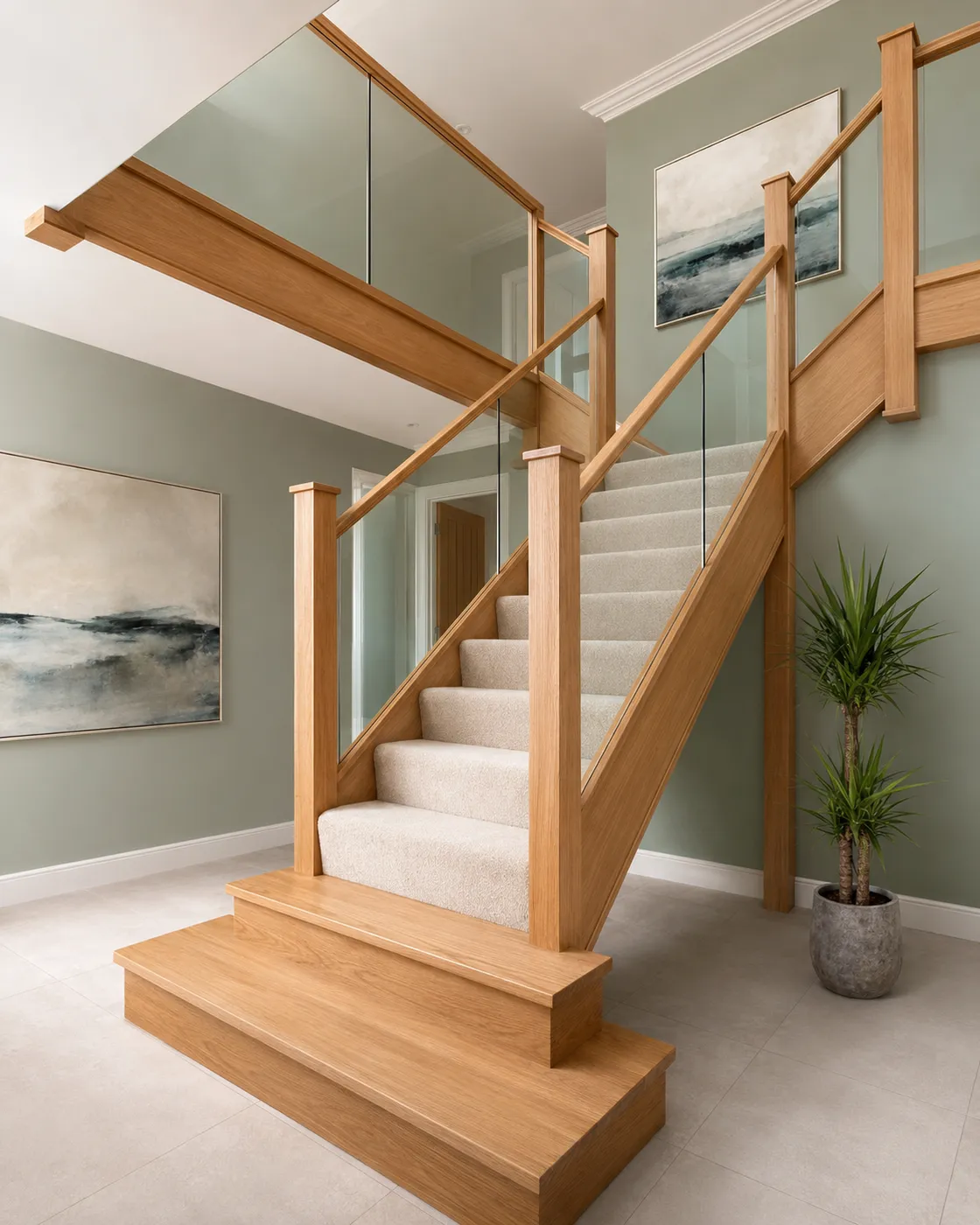
- A new staircase with winders, a half-landing or a glass balustrade — commonly £6,000–£12,000.
- A curved or cantilevered “floating” staircase — a design-and-engineering piece that usually starts around £12,000 and rises with complexity.
Treat these as starting points, not fixed prices. The only way to know what your staircase costs is a measured quote — but understanding the levers below will tell you why two quotes can differ by thousands.
What actually moves the price
1. Size and shape
More steps means more material and more labour, but shape matters even more. A straight flight is the simplest to build; add winders, a half-landing, or a curve and the joinery, templating and fitting time climb quickly. A cantilevered staircase also needs structural design, which a straight flight does not.
2. Timber
Oak is the popular default and the most cost-effective of the fine hardwoods. Walnut and other premium timbers can add noticeably to the material cost. We only ever build in 100% solid hardwood, never veneered board — which costs a little more up front and lasts generations longer. If you are weighing timbers, our guide to oak vs walnut vs ash goes deeper.
3. The balustrade
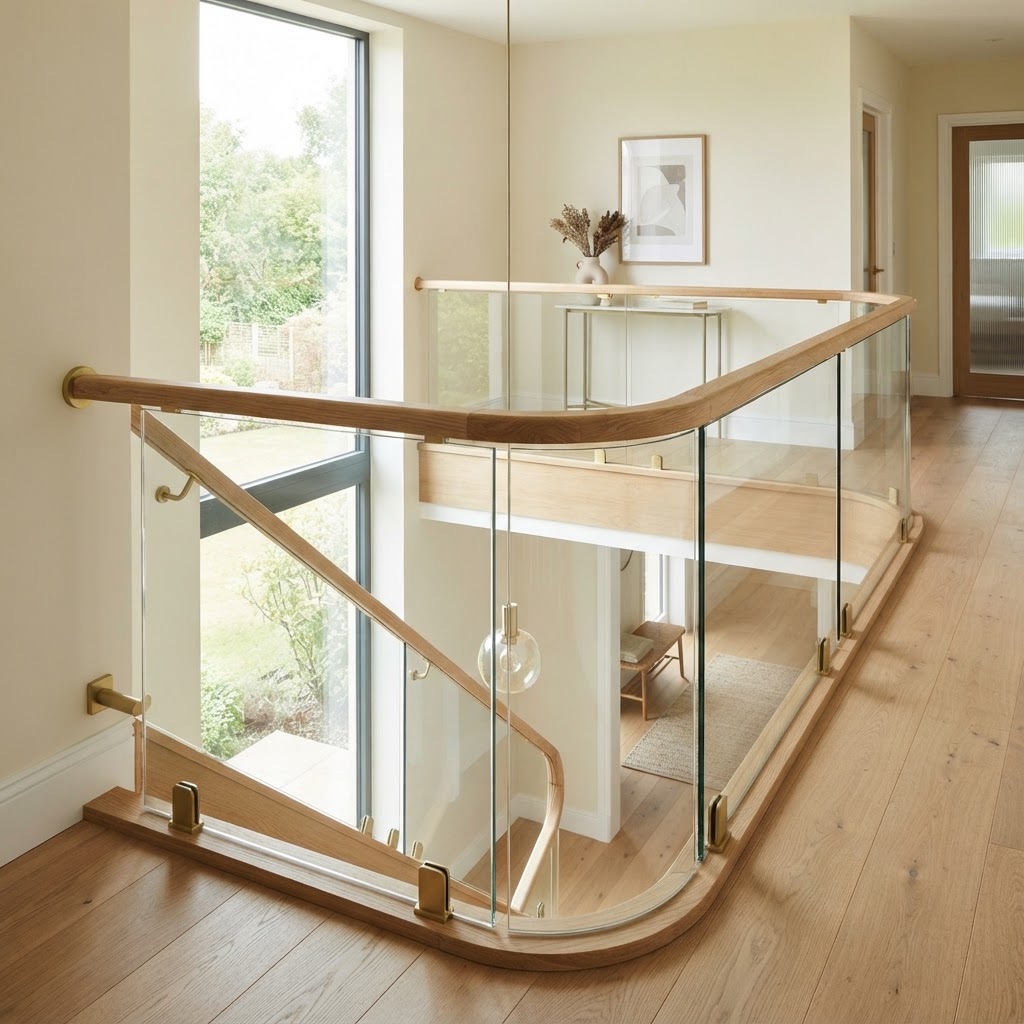
The handrail and infill can be a big slice of the total. Traditional turned timber spindles are the most economical; frameless glass balustrades use toughened glass and precision fixings, so they cost more but transform the light and feel of a stairwell.
4. Finish and detailing
Natural, oiled or lacquered finishes, dyed risers, two-tone combinations, bespoke newel caps — each adds hand-finishing time. They are what make a staircase feel considered rather than off-the-shelf, but they do add to the bill.
5. New build vs cladding
If your existing staircase is structurally sound, cladding it in solid hardwood is usually far cheaper than a full replacement, because you are reusing the structure and avoiding the disruption of tearing it out. It is the single biggest saving available on this list — more on that in cladding vs a new staircase.
How to read a staircase quote
When you compare quotes, make sure you are comparing like for like:
- Supply only vs supply and fit. A cheap-looking price may be for the staircase delivered flat, with installation extra.
- VAT. Trade quotes are sometimes shown ex-VAT. Check whether the figure includes it.
- What's included. Handrail, spindles, newel posts, finishing and making good should all be spelled out — not assumed.
- Solid timber vs veneer.A lower price is sometimes a veneered MDF core dressed up as “oak.” It is not the same product.
The short version
Budget from around £2,395 to refresh an existing staircase in solid oak, from roughly £4,000 for a new straight oak flight, and more for winders, glass or curves. The right number for your home comes from a survey — we offer that, and a fixed written quote, free of charge.